

Through the first half of the season, Fernando Tatis Jr. was a mystery to fans. He was completely out of sorts, and didn’t hit his first home run of the year until May 30th.
Not only was Tatis the second-last qualified player to hit a home run, but he also slugged just .307 through those 55 games. His power production was comparable to the likes of Jared Triolo or Drew Romo.
Fast-forward to August, where Tatis is slugging an MLB-best .737 in the month of August with 9 home runs in 20 games. He’s mashed the most home runs in baseball since the All-Star break, and is walking (13.1%) more than he’s striking out (11.1%).
The guy that couldn’t get one over the fence is now pacing all hitters in the power department. Not only does this illustrate his talent, but truly how bizarre the early-season slump actually was.
Through his ascent, Tatis is actively making small mechanical tweaks, although the primary transformation is taking place on the mental side. Here’s what he’s doing differently, and how it’s driving his success.
Finding a feel for his timing, and swinging freely
The number one metric that stands out in this surge from Tatis is that his bat speed jumped to 77.8 mph in August from 74.5 back in April. That kind of improvement doesn’t stem from small stance changes or a weight program. Instead, it derives from comfort in the box and in swinging freely.
Across the MLB season, an individual player’s bat speed generally fluctuates by no more than 1 mph. Under this logic, it’s easy to realize why the 3.3 mph jump is such a large-scale midseason turnaround.
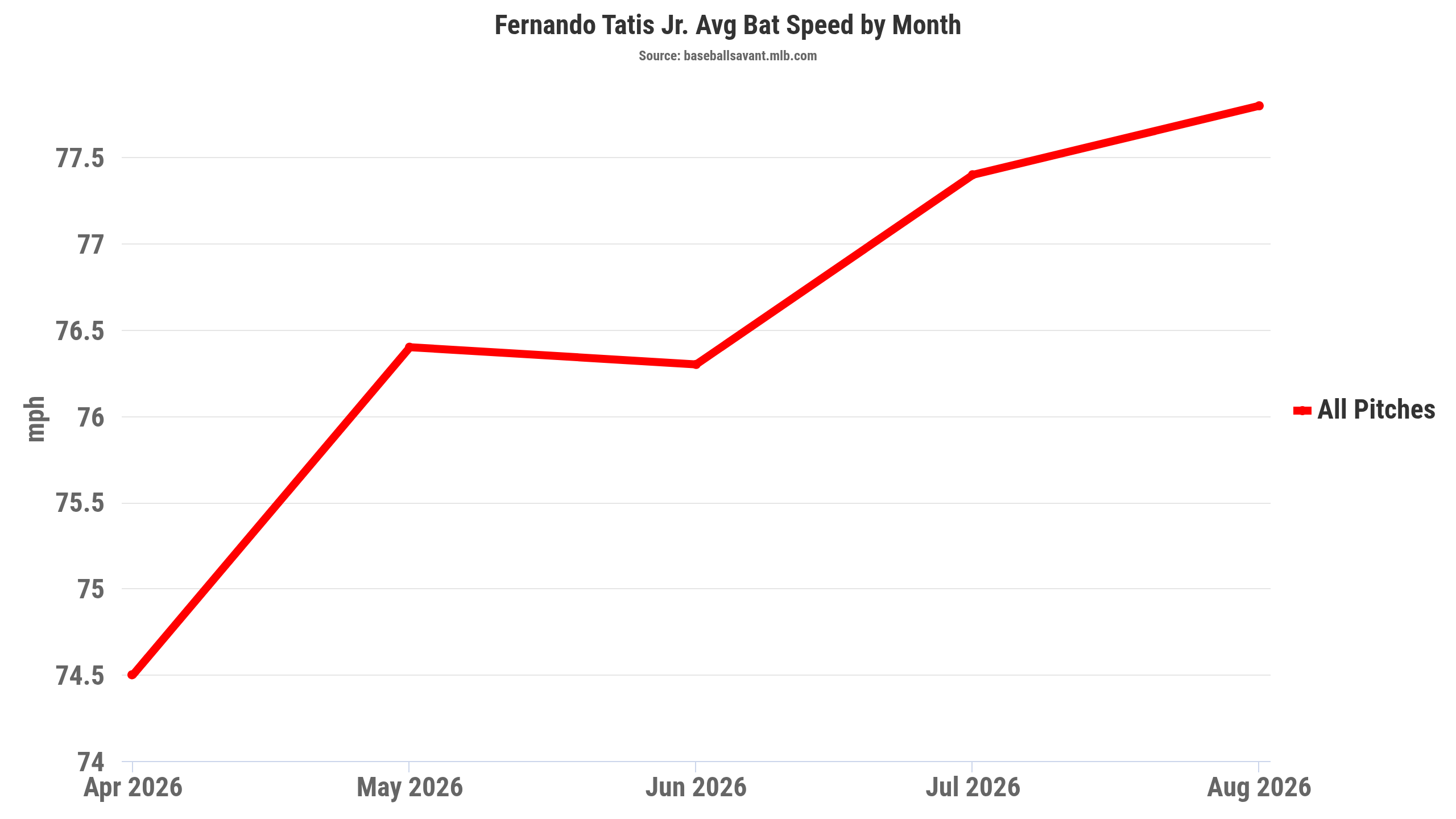
Tatis is swinging the hardest he ever has in a month since the bat tracking era began in 2023. He connected on 49 balls hit over 100 mph in 34 games since the All-Star break. He also leads the MLB with four home runs hit 450+ feet, another funny-sounding stat for the player who took two months to hit one out.
The lesser talked about metric that is changing for the better is Tatis’s intercept point, or where he contacts the ball. Throughout 2026, Tatis is catching the ball further out in front, which is creating more damage on his contact.
Here’s an example from early July, of Tatis swinging freely and contacting the ball in a danger-imminent position. We see his A-swing come out, and the result of a hard-hit double reflects that A-swing.
However, here’s a different example from all the way back in March. In this video, Tatis’s stance is closed off and he takes a B-swing that looks doomed from the start. He appears locked out of rotational force and too reactive to the pitch location.
Fortunately, that lower-half deadlock is well out the window in the second half. He’s starting more open, and looking to pull the ball with his full body, not just his arms.
The mechanical fixes
While they are few, Tatis did make a couple of key changes to his mechanics. However, these weren’t overnight fixes that trace back to a specific game or series.
Instead, these developments are coming somewhat naturally throughout the season. While there’s surely intention behind them, the tape indicates that Tatis is gradually opening up and returning to his athletic peak as a hitter.
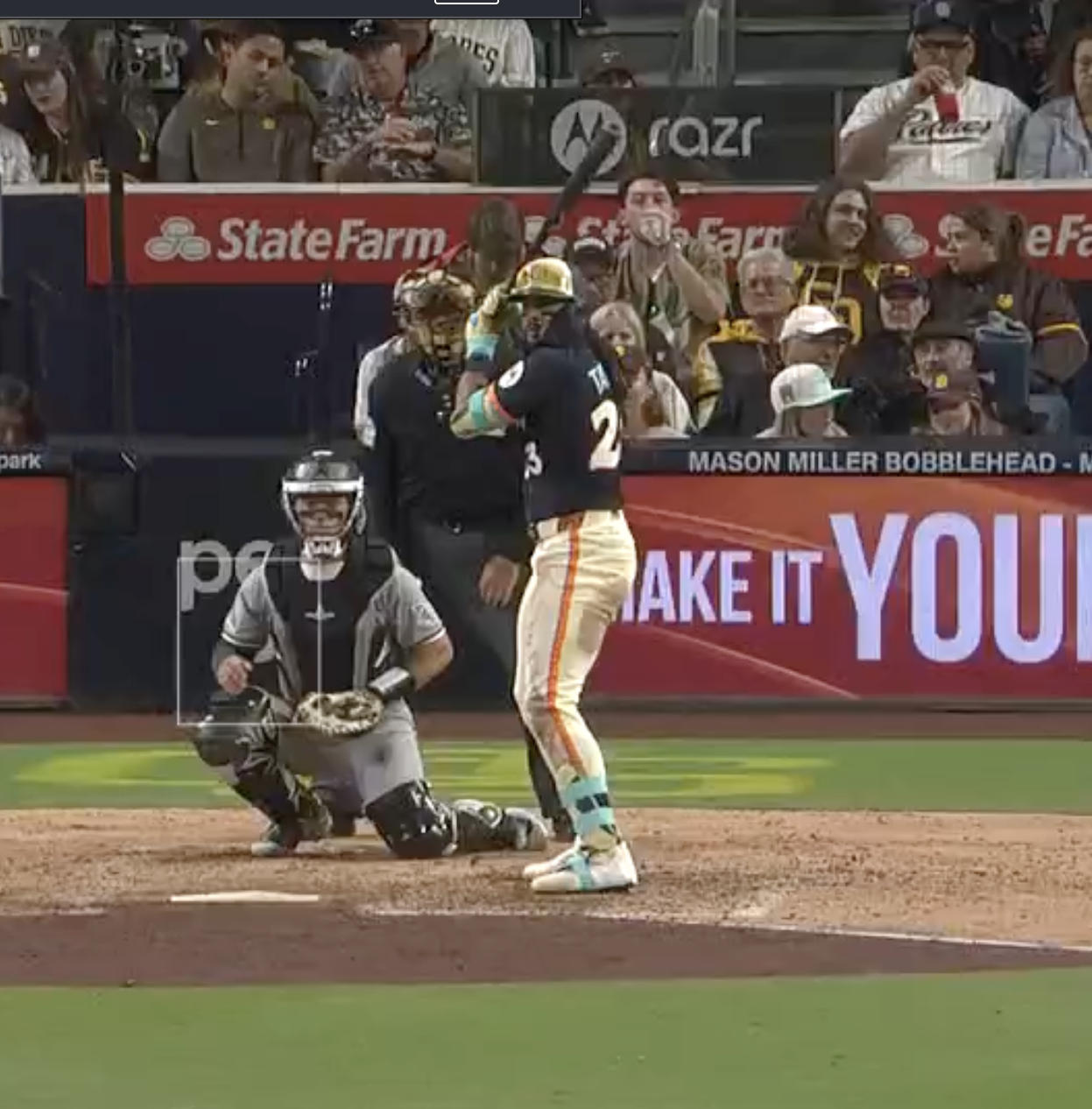
The clear development that jumps out is that Tatis is far more opened up in his stance, which makes sense for a guy who struggled to pull the ball for months. While he obviously closes back up in his swing, the space to pull the inside pitch makes a big difference for a player who already gets to the outside pitch well.
Although more subtle, a slight lean of the torso is actually making the biggest impact on his turnaround. Think of it as ‘unlocking his athleticism’. With these two fixes, his backside is driving through the ball with improved rotational force, and he’s pulling the ball with ease.
Here’s his stance on May 1, with a closed stance standing essentially straight up:
Now, here’s his stance on August 11, just prior to his 12th home run of the season: 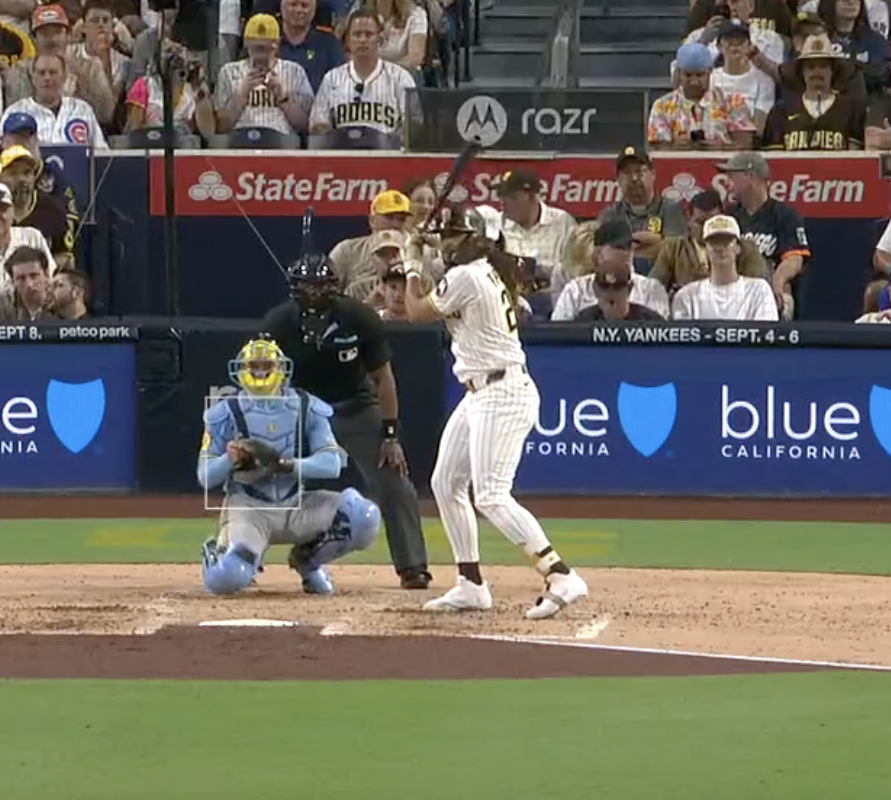
If you had to answer the question “which one looks more athletic”?, you’d almost certainly choose the second photo. For Fernando Tatis Jr. (and many other players), the more athletic setup is the better setup.
His impact on San Diego’s season
It’s not easy to single out Tatis as the single-reason for San Diego’s second half success. That’s because his colleague in center field, Jackson Merrill is hanging just below Tatis on many second-half stat leaderboards. The 23-year-old is on a heater of his own, and the pair are leading an offensive revival of the Padres.
However, Tatis is playing like a true MVP right now, which is a level many thought he would never reach once more. While it’s been just over a full month since the break, it’s hard to see San Diego missing the Postseason with Tatis on this level.
In that case, the Postseason stage would only amplify Tatis. He is the Padres all-time Postseason OPS leader (Min. 25 PA), and has a history of powering up his swing when the calendar flips to October.
It’s a long way to travel from homer-less laughing stock to Postseason hero, but the path is certainly clear for Tatis. A healthy September is all that’s left on the docket for the Padres’ rejuvenated superstar.