

TORONTO, ON — The Toronto Blue Jays came inches away from what could have been a season-defining moment — instead, it ended in confusion, frustration, and ultimately, confirmation that the umpires got it right.
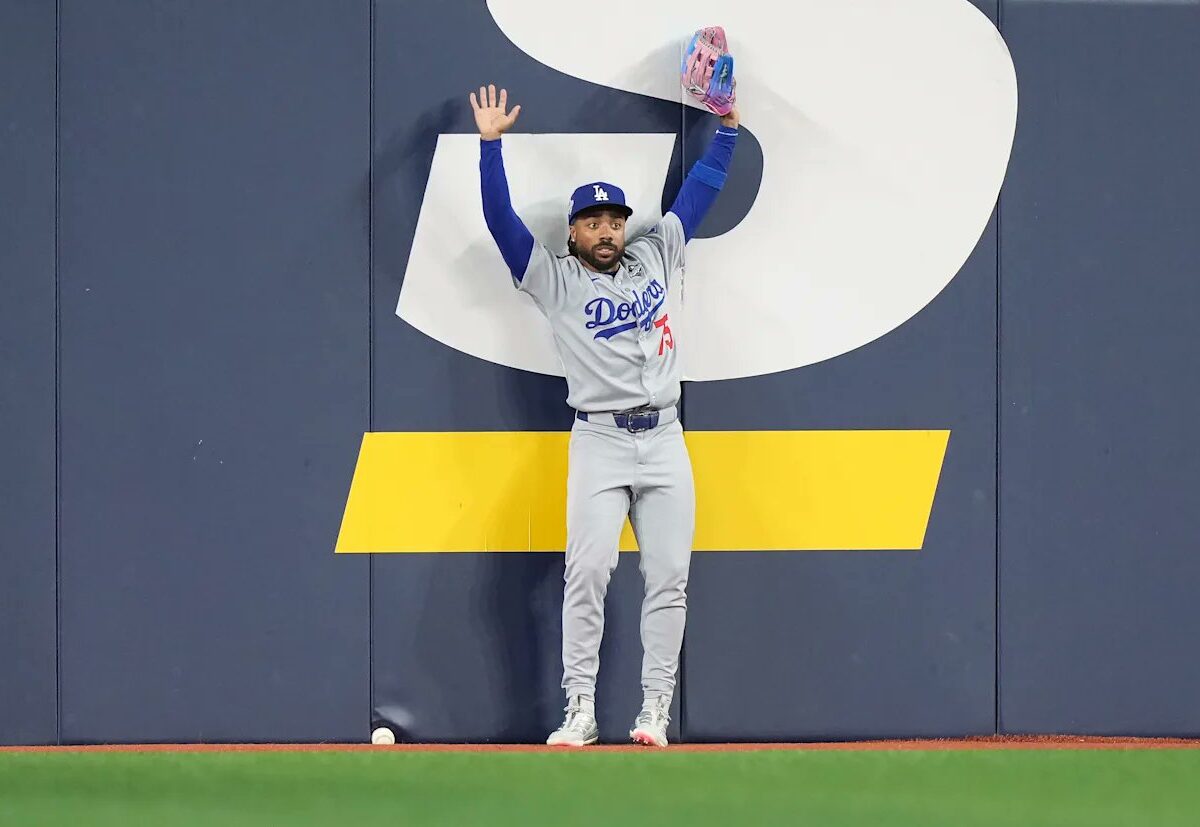
In the bottom of the 9th inning of Game 6 of the World Series, trailing 3–1 to the Los Angeles Dodgers, Blue Jays rookie Addison Barger smashed a line drive into deep center field. The ball slammed into the wall and was lodged into the padding at the base of the fence.
Dodgers outfielder Justin Dean, who had just been brought into the game as a defensive replacement, instantly recognized the situation. Rather than attempting to dig the ball out, he threw his hands up to signal to the umpires, invoking MLB’s ground rule for a lodged ball.
The wall that lodged the World Series ball yesterday in the 9th inning, preventing the @BlueJays win will go down in history 😭💔
So close to am epic comeback for the Jays! pic.twitter.com/xFNRJA8GMt
— Pikanomic Collectibles ✨ (@Pikanomics) November 1, 2025
The umpires ruled the ball dead and awarded two bases to all runners, consistent with MLB Rule 5.05(a)(7). The hit instead became a ground-rule double. The Dodgers held their lead and closed out a 3-1 victory, evening the series 3-3 and forcing a decisive Game 7.
What the Rule Says
Per MLB Rule 5.05(a)(7):
A ball is considered lodged if, in the judgment of the umpire, the natural trajectory of the ball is interrupted long enough to affect further play. A batted ball that sticks in or goes under padding, shrubbery, a tarp, or a fence should be considered lodged… Runners are awarded two bases when it is ruled lodged.
Perhaps the most important sentence in the entire rule states:
“How easily a ball might be retrieved by the fielder should not factor in the decision as to whether or not to be declared lodged.”
Read the rule. It is exactly what happened. If the ball gets stuck to the point where it changed what was going to happen to the ball (it should have bounced back to the fielder) it is a dead ball. That is exactly how it’s written! pic.twitter.com/8NJdBwOb8Z
— C3REALKILL3R (@cerealkill3rX) November 1, 2025
In other words, it doesn’t matter that the ball could have been played. If it is stuck or wedged in such a way that it interrupts natural play, it must be called dead, and runners get only two bases.
So… Were the Blue Jays Robbed?
No.
Emotionally? Absolutely.
By the rulebook? Not at all.
The call was frustrating for Toronto fans — especially in a dramatic World Series moment — but it was 100% correct according to Major League Baseball’s rules. The ball was clearly lodged under the outfield padding. Dean followed protocol. The umpires applied the rule exactly as written.
This wasn’t a judgment call gone wrong. It wasn’t umpire interference. It wasn’t even controversial from a legal standpoint. It was textbook.
-
If the ball had stayed in play, the tying run almost certainly scores from first.
-
Instead, the Blue Jays were left with runners on second and third, down by two, with no outs — and they couldn’t convert.
-
The Dodgers closed it out, won 3-1, and pushed the World Series into Game 7.
Sports fans love drama, and this play delivered it. But in terms of the rulebook, the Blue Jays weren’t robbed. The umpires followed MLB regulations exactly, and the Dodgers played it smart.
Now, everything comes down to Game 7.
Baseball doesn’t get any better than that.
https://twitter.com/XInvestHunter/status/1984592326631833852




8 Comments